Reviewing Daddy’s Fishing Buddy for Real Embroidery
As a designer who spends more time staring at stitch simulations than I care to admit, I approach every new machine embroidery design with a mix of optimism and skepticism. We have all been there: you download a cute graphic, load it onto your machine, and watch in horror as the thread bunches up or the details vanish into the fabric. That is why I took a close, practical look at Daddy’s Fishing Buddy. This isn’t just about whether the image is cute; it is about whether it holds up when translated from a digital embroidery file into a tangible, stitched reality.
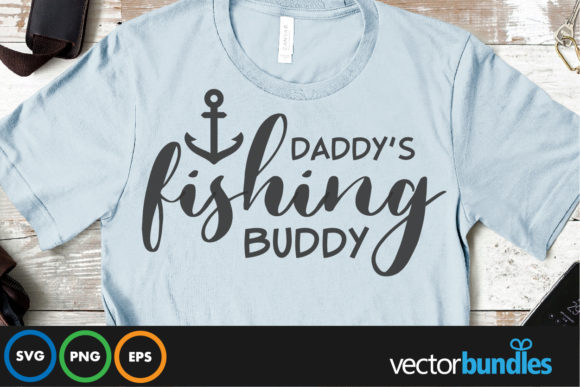
The first impression of Daddy’s Fishing Buddy is warm and nostalgic. It captures that specific, quiet bond between a father figure and a child, centered around the patience and joy of fishing. Visually, the layout feels balanced. For those of us in the Crafts community, we know that balance is everything. If a design is too heavy on one side, it pulls the garment. If the elements are too scattered, the eye doesn’t know where to rest. This design seems to understand spatial relationships, offering a central focal point that would translate well to various hoop sizes without feeling cramped or lost.
From Digital Assets to Stitched Reality
Let’s talk about the files. You receive a zip folder containing SVG, PNG transparent, and EPS formats. For the modern Etsy seller or small shop product creator, this versatility is crucial. While these formats are explicitly compatible with software like Cricut Design Space and Silhouette, indicating their strength as design assets for cutting machines and print-on-demand, we need to address the elephant in the room for embroiderers. Typically, a dedicated machine embroidery design comes in PES, DST, or JEF formats. Since the provided list highlights vector and raster graphics, I strongly advise checking if a separate embroidery-specific file is included or if you are expected to digitize these vectors yourself. If you are using this as a reference for manual digitizing, the clean lines of the SVG and EPS are excellent starting points.
Assuming you are using this as a high-quality reference for creating your own stitches or applying it via heat transfer vinyl (HTV) alongside embroidery, the potential is high. Imagine preparing a custom sweatshirt embroidery project for a client. The theme fits perfectly on a heather grey crewneck. The visual personality of Daddy’s Fishing Buddy suggests a casual, outdoorsy vibe. It is not overly formal, which makes it ideal for everyday wear. When I visualize this on a tote bag design, I see it working beautifully on a canvas material. The sturdy texture of canvas can handle denser stitching, allowing the details of the fishing rod and characters to pop without sinking into the weave.
Practical Application in Client Projects
I recently considered a similar theme for a personalized gift order—a set of matching aprons for a grandfather and grandson. In this real-life scenario, Daddy’s Fishing Buddy would serve as the centerpiece. The mood it creates is one of legacy and shared time. For an embroidered patch, this design would need careful attention to stitch density. Patches often use a heavy satin stitch border to prevent fraying. If you are adapting this graphic for a patch, ensure the internal details do not become too cluttered. A fill stitch background might overwhelm the smaller elements, so relying on clean running stitch outlines or strategic satin columns could maintain clarity.
For baby embroidery projects, such as a onesie or a nursery decor pillow, scale is your best friend and your worst enemy. This design likely contains fine lines. On a small hoop, say 4x4 inches, those tiny details might merge. I always recommend testing the design on scrap fabric first. Check how the thread colors interact. A navy blue thread on a white onesie offers high contrast and readability, but if you try a light blue on a pastel yellow, the design might disappear. Always test your color combinations in black and white mockups first to judge value contrast before committing to expensive threads.
Navigating Fabric and Technical Challenges
Where should you use caution? Any design with intricate lines struggles on textured fabrics. If you are stitching Daddy’s Fishing Buddy on a waffle-knit thermal or a rough linen kitchen towel, the needle may skip, or the fabric may pucker. In these cases, a cut-away stabilizer is non-negotiable. It provides the necessary support to keep the stitches flat and even. For stretchy fabrics like jersey t-shirts, avoid placing the design over areas that will undergo significant tension, such as the chest area of a fitted shirt, unless you use a stabilizer designed for knits.
Curved surfaces present another challenge. If you are attempting this on a cap or hat, the curvature can distort the image. The horizontal lines of the fishing rod might appear bowed if not digitized with compensation for the curve. Furthermore, dark fabrics require careful planning. If you are stitching on a black hoodie, you cannot simply use white thread for everything if you want a subtle look. You might need to underlay with white to make the colors pop, or choose bright, contrasting thread colors to ensure the finished product looks professional rather than muddy.
Enhancing Brand Value and Customer Trust
Why does the quality of your digital embroidery file or graphic matter? Because it directly impacts perceived value. A crisp, well-executed design signals professionalism. When customers see a clean handmade product, they trust the maker. Daddy’s Fishing Buddy has the emotional resonance to drive sales, particularly around Father’s Day, birthdays, or holiday seasons. Holiday embroidery sells because it taps into sentiment. By offering this design on high-quality items like tote bags or sweatshirts, you are not just selling cloth; you are selling a memory.
For commercial embroidery purposes, consistency is key. If you are producing multiple units for a boutique, ensure your tension settings are calibrated. A design that looks great on one machine might puckers on another if the tension is off. Use this design to build brand consistency. If your shop specializes in outdoor or family-themed goods, Daddy’s Fishing Buddy fits seamlessly into that narrative. It reinforces your brand identity as a provider of thoughtful, personalized items.
Final Designer Notes for Success
Before you launch this into your craft business, take these practical steps. First, confirm the licensing. Just because you have the SVG and PNG does not automatically grant commercial rights for mass production unless specified. Always read the terms. Second, inspect the small details. Zoom in on the EPS file. Are the lines smooth? Are there jagged edges that will translate poorly to stitches? Third, consider the end user. Will this item be washed frequently? If so, opt for polyester threads which are more durable and colorfast than rayon.
In conclusion, Daddy’s Fishing Buddy is a charming addition to your library of Graphics and craft resources. Its strength lies in its emotional appeal and versatile layout. However, its success in embroidery depends entirely on your technical execution. Respect the fabric, choose the right stabilizer, and test your stitches. When done correctly, this design transforms from a simple digital file into a cherished keepsake. Whether you are an experienced decorator or a hobbyist making gifts for family, this design offers a solid foundation for creating meaningful, high-quality work. Keep your needles sharp, your tension balanced, and your creativity flowing.