Reviewing Just a Girl Who Loves Horses for Embroidery
As a designer who spends more time staring at stitch simulations than I care to admit, I have learned that not every cute graphic translates well into thread. We have all been there: you find a charming illustration, imagine it perfectly centered on a toddler’s sweatshirt, and then watch in horror as the machine turns fine details into a tangled mess of bobbin thread. This is why I approach new assets with a critical eye. Recently, I evaluated Just a Girl Who Loves Horses, a digital asset set that promises versatility for crafters and small business owners. Here is my honest take on how this design holds up when moved from the screen to the sewing room.
First Impressions and Visual Personality
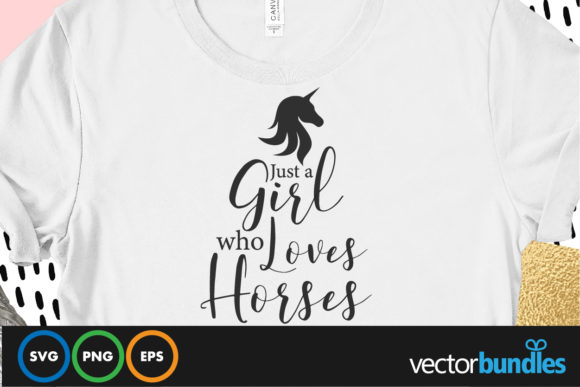
The first thing that strikes me about Just a Girl Who Loves Horses is its clean, confident silhouette. In the world of Crafts and Graphics, simplicity is often king, especially when we are talking about embroidery. Complex gradients and tiny text rarely survive the transition to fabric. This design, however, relies on strong shapes and clear lines. It evokes a sense of playful nostalgia, appealing directly to equestrian enthusiasts without feeling cluttered.
The mood is lighthearted yet polished. It does not scream for attention; instead, it invites a closer look. For an embroidery project, this is ideal. The layout suggests a balance between decorative appeal and technical feasibility. When I visualize this as a machine embroidery design, I see potential for crisp satin stitches outlining the main figures, with perhaps some subtle fill stitches if the design variant allows for internal detail. The visual personality fits seamlessly into the current trend of minimalist, statement-piece apparel.
Real-World Application: The Tote Bag Test
To truly judge a design, you must imagine it in use. I pictured this asset applied to a heavy canvas tote bag, a staple item for any Etsy seller or craft fair vendor. Canvas has a distinct texture, and low-quality designs often get lost in the weave. Because Just a Girl Who Loves Horses features bold elements, it stands out beautifully against the rougher grain of cotton canvas.
I also considered its application on a fleece sweatshirt. Fleece is tricky; it piles up and can swallow small details. However, the robust nature of this graphic means it would likely sit proudly on the chest or sleeve of a custom hoodie. It creates an instant connection with the wearer, transforming a basic garment into a personalized gift that feels thoughtful and specific. For a small shop product, this kind of immediate recognizability is crucial for buyer engagement.
Navigating Fabric and Hoop Constraints
While the design is strong, practical embroidery requires us to respect the limitations of our materials. If you are planning to use this on a curved surface, such as a cap or hat, you need to be mindful of the hoop size. A standard 4x4 inch hoop might constrain the design if it is particularly wide. I always recommend checking the dimensions of the specific file version you intend to use. If the design is too large for a cap, it may require resizing, which can compromise stitch density and clarity.
Textured fabrics present another challenge. On a waffle-knit thermal or a thick towel, the stitch density becomes critical. If the design relies on thin running stitches, they may disappear into the fabric loops. In such cases, using a cutaway stabilizer is non-negotiable to provide a firm foundation. For stretchy fabrics like jersey t-shirts, a no-show mesh stabilizer will prevent puckering, ensuring that Just a Girl Who Loves Horses remains smooth and professional-looking after washing.
Dark fabrics require special attention to thread choice. Since this design likely features solid shapes, you cannot rely on the fabric color to show through. You must use opaque, high-quality polyester or rayon threads. A test run on scrap fabric is essential here. I always stitch a sample on the actual garment material to check for thread breaks and color contrast before committing to the final finished product.
Commercial Viability and Brand Consistency
For those running a craft business, consistency is key. This design fits well within a broader collection of equestrian-themed items. It can serve as a standalone motif on a pillow cover or as part of a larger suite of design assets for nursery decor. Its versatility allows it to bridge the gap between childish whimsy and adult appreciation, making it suitable for baby embroidery projects as well as adult custom apparel.
When selling on platforms like Etsy, the visual appeal of your mockups drives clicks. Because the files included are compatible with many software programs such as Cricut Design Space and Silhouette, you can easily create printable mockups or vinyl decals alongside your embroidered items. This cross-platform compatibility is a significant advantage. It allows you to offer the same design in multiple formats, appealing to customers who may not have an embroidery machine but still want the aesthetic on a sticker or iron-on transfer.
However, always verify the licensing terms. While the product description mentions receiving SVG, PNG, and EPS files, it does not explicitly state commercial rights for the embroidery file itself if one were generated separately. If you are converting these graphics into stitches using auto-digitizing software, ensure you have the right to sell the resulting physical goods. Most designers allow commercial use of finished physical items, but digital resale of the embroidery file is typically prohibited. Always read the specific license included in your zip file.
Technical Notes for the Serious Stitcher
Before you load this design into your machine, consider these practical steps to ensure quality:
- Check Stitch Density: If you are digitizing this from the provided SVG or EPS, avoid over-density. Too many stitches in a small area will cause puckering and thread breaks.
- Test Thread Colors: Choose threads that complement rather than clash. Earth tones often work well with horse themes, but a pop of bright color can modernize the look.
- Inspect Small Details: Look closely at the eyes or hooves of the horse. If they are too small, they may not stitch out cleanly. You might need to simplify these areas or enlarge the overall design.
- Use Proper Stabilizer: Match your stabilizer to your fabric. Tear-away for stable woven fabrics, cutaway for knits, and water-soluble for towels or delicate materials.
- Verify Hoop Size: Ensure your machine’s hoop can accommodate the design dimensions without requiring re-hooping, which can lead to alignment issues.
Final Verdict
Just a Girl Who Loves Horses is a solid addition to any designer’s library. It balances charm with technical practicality, making it a reliable choice for a variety of embroidery projects. Whether you are creating holiday gifts, boutique merchandise, or personalized items for friends, this design offers the clarity and appeal needed to produce high-quality results. By respecting fabric constraints and testing your setup, you can turn this digital graphic into a tangible product that customers will love and trust. It is a reminder that good design is not just about what looks good on screen, but what stitches out beautifully in real life.